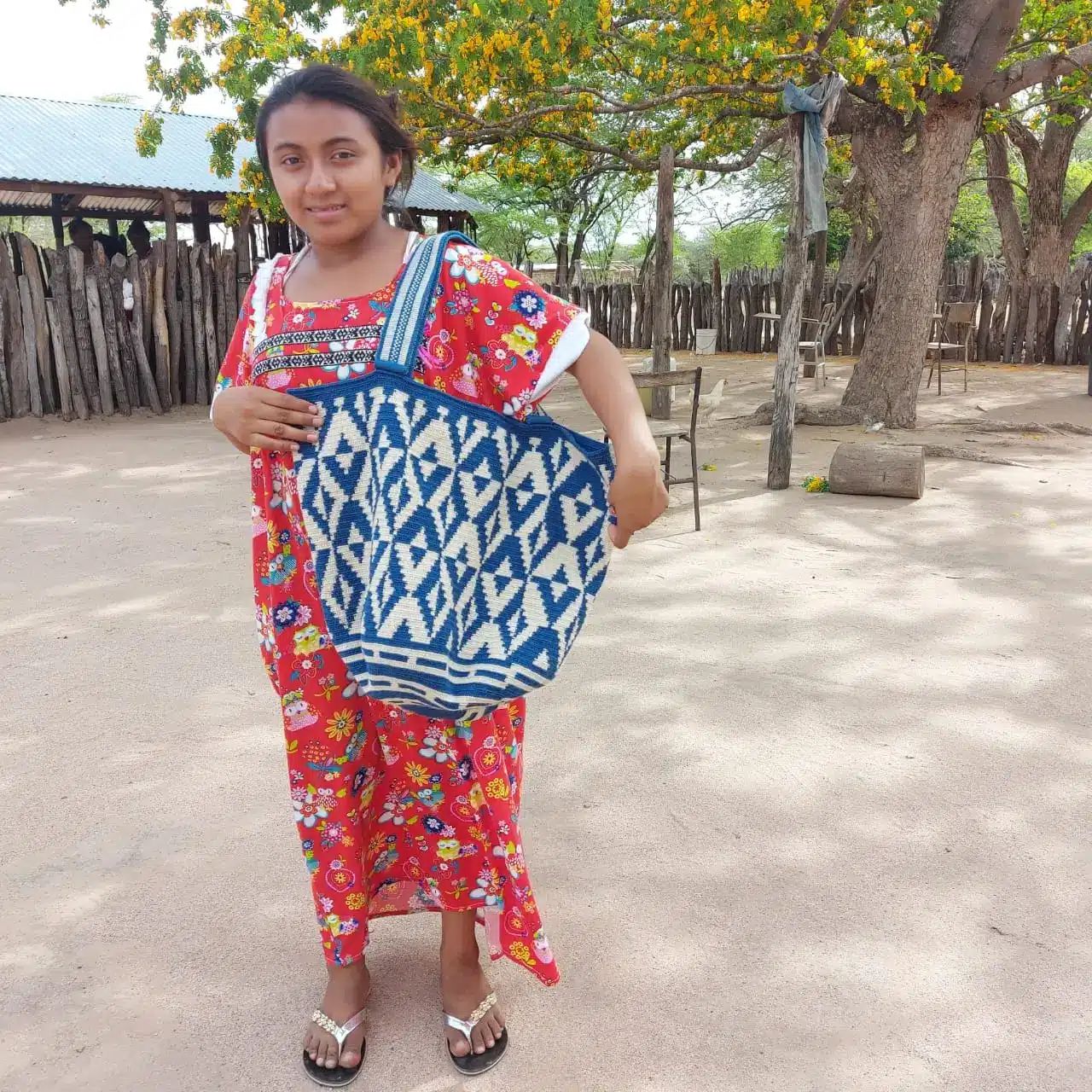
The Wayuu people are the heart of Colombia’s indigenous heritage. Living in the arid desert of La Guajira, in northern Colombia, they have preserved their culture, language, and artistry for centuries. At Colombian Native Craft, we honor the Wayuu community’s legacy through their vibrant crafts, especially the iconic Wayuu bags that have captivated the world. Their resilience, creativity, and deep connection with nature make them one of Colombia’s most inspiring indigenous groups.
The Origins of the Wayuu People
The Wayuu people belong to the Arawak linguistic family, sharing ancestral roots with other indigenous communities of northern South America and the Caribbean. They have inhabited the Guajira Peninsula for hundreds of years, adapting to its desert landscape with wisdom and ingenuity. Despite colonization and modernization, the Wayuu have maintained their autonomy and continue to live according to their traditions, values, and matrilineal system.
The Wayuu Territory – Life in La Guajira Desert
The Wayuu territory is a vast, sun-drenched region that stretches across Colombia and Venezuela. It is a land of contrasts — dry dunes, cacti, and stunning sunsets over the Caribbean Sea. For the Wayuu people, this environment is sacred. They live in small family settlements called “rancherías,” where each household is self-sufficient, raising goats, cultivating small crops, and weaving daily. Despite the harsh climate, their lifestyle demonstrates harmony with nature and deep respect for the land.
The Role of Women in Wayuu Culture
Women play a central role in the Wayuu people’s community. They are the weavers, educators, and cultural transmitters. From a young age, girls learn the art of crochet, creating intricate patterns known as kanas that represent natural elements, dreams, and myths. Each stitch tells a story, preserving Wayuu traditions through textile art. Their famous woven bags — mochilas Wayuu — symbolize creativity, identity, and the power of feminine craftsmanship.
Wayuu Language and Oral Traditions
The Wayuu people speak Wayuunaiki, an Arawakan language that connects them to their ancestors. Their culture is primarily oral — history, mythology, and knowledge are passed down through storytelling. The language contains words for the desert’s plants, animals, and winds, showing their deep connection with the environment. Learning Wayuunaiki is essential for preserving their identity, and many modern initiatives now focus on teaching it to younger generations.
Spiritual Beliefs and Worldview
Spirituality is vital to the Wayuu people. They believe in Maleiwa, the creator, and in the spirits that inhabit nature. Dreams play a crucial role in their worldview, guiding daily decisions and social interactions. Life and death are intertwined in their philosophy — the dead continue to live spiritually and protect the living. Ceremonies and rituals reflect this connection, ensuring balance between the physical and spiritual worlds.
Weaving – The Symbol of Wayuu Identity
Weaving is the soul of the Wayuu culture. The intricate patterns on their textiles carry messages about nature, family, and community. The Wayuu people say that weaving is a form of meditation, where the artisan connects with her spirit. Each Wayuu bag represents discipline, creativity, and love for tradition. Today, this art form has become one of Colombia’s most recognized crafts, admired for its quality and symbolism.
Challenges Faced by the Wayuu People
Despite their rich culture, the Wayuu people face social and environmental challenges. Limited access to water, education, and healthcare continues to affect their communities. Climate change has worsened desert conditions, making survival more difficult. However, their resilience and adaptability remain strong. Organizations and local cooperatives, including Colombian Native Craft, work to support fair trade and promote sustainable livelihoods through traditional weaving.
Sustainability and the Wayuu Way of Life
Sustainability is not a trend for the Wayuu people — it’s a way of life. Their daily practices reflect balance and respect for nature. They reuse materials, cultivate only what they need, and weave with minimal waste. By purchasing authentic Wayuu crafts, you contribute to their sustainable development while preserving ancient traditions.
Global Recognition of Wayuu Art
The craftsmanship of the Wayuu people has gained international recognition. Their handmade bags are showcased in fashion shows, boutiques, and museums worldwide. Designers admire their precision, patterns, and symbolism. Yet, despite this fame, every authentic Wayuu creation remains a humble expression of culture, spirituality, and identity — not merely a product, but a living tradition.
Handmade is heartmade. The Wayuu people remind us that creativity and resilience can turn even the harshest environments into sources of beauty and inspiration.
FAQs – Wayuu People
Who are the Wayuu people?
They are an indigenous community from northern Colombia and Venezuela, known for their weaving and cultural resilience.
Where do the Wayuu people live?
They live in the Guajira Peninsula, a desert region along the Caribbean coast of Colombia.
What are Wayuu bags?
Wayuu bags are handwoven by Wayuu women using traditional techniques passed down for generations.
What language do the Wayuu people speak?
They speak Wayuunaiki, an Arawakan language that reflects their environment and spiritual beliefs.
How do the Wayuu people sustain themselves?
They depend on weaving, goat herding, small-scale farming, and fair trade artisan work.
Can I support the Wayuu artisans?
Yes! Contact us on WhatsApp or shop authentic pieces directly at Colombian Native Craft.
Leave a Reply