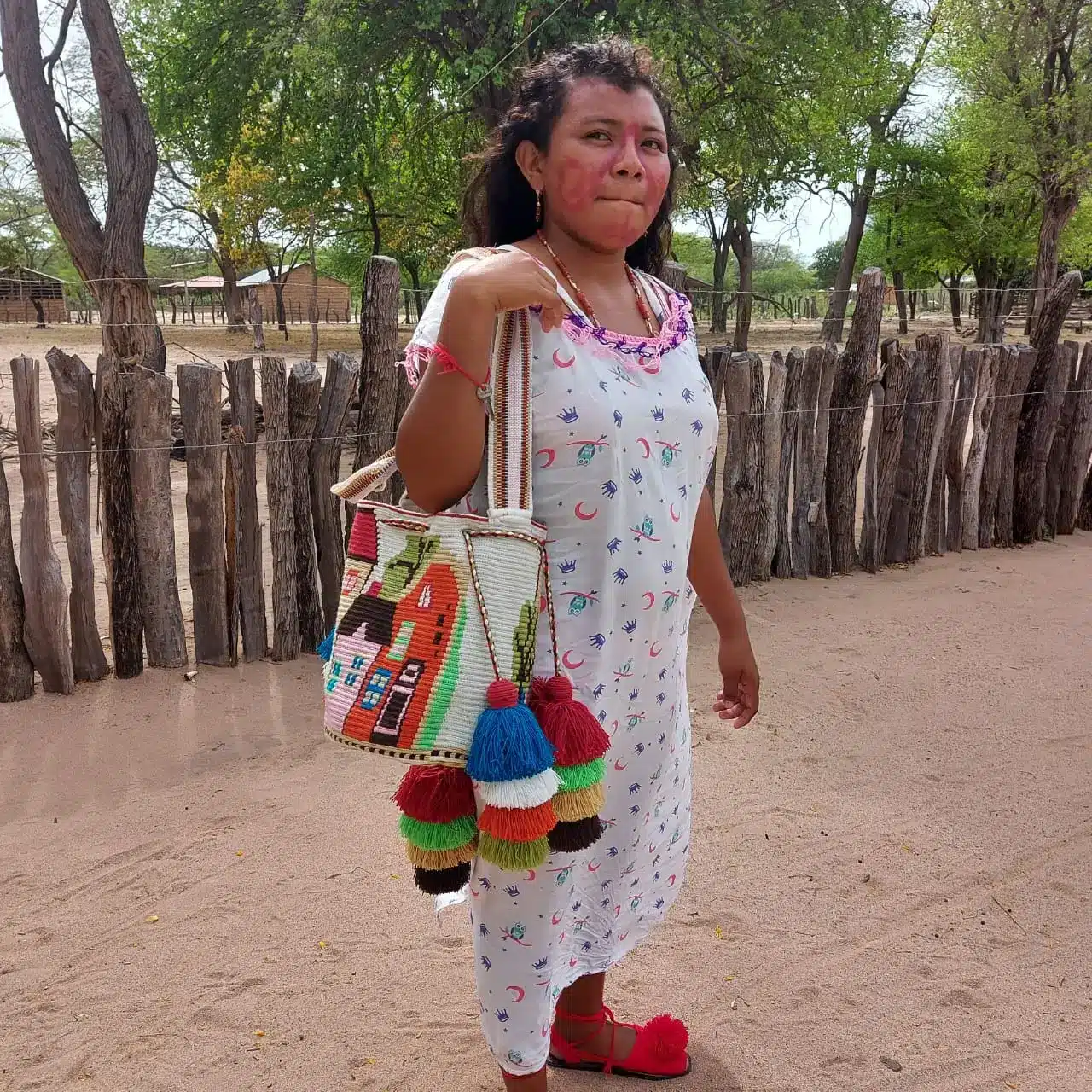
Nestled in the sun-drenched deserts of La Guajira in northern Colombia and the Zulia region of Venezuela, the Wayuu people have preserved their culture and language for generations. Their language, known as Wayuunaiki, is not just a means of communication — it is a living vessel of identity, oral tradition, and ancestral wisdom.
With over 400,000 speakers today, the Wayuu language is one of the strongest Indigenous tongues in Latin America. Yet like many Indigenous languages worldwide, it faces the pressures of modernization and language loss. Preserving it requires both cultural commitment and tangible support from beyond the community.
At Colombian Native Craft, we proudly support Wayuu artisans by ethically marketing their iconic Wayuu bags (mochilas) — vibrant pieces of cultural expression that help sustain language and heritage through fair trade.
What Is the Wayuu Language?
Wayuunaiki is the native language of the Wayuu, an Indigenous people whose ancestral lands stretch across the Guajira Peninsula. It belongs to the Arawakan language family, one of the oldest and most widespread linguistic groups in South America.
Unlike many Indigenous languages that are endangered or extinct, Wayuunaiki is considered vital, meaning it is still actively spoken by all generations within the community. That vitality makes it both a cultural treasure and a symbol of resistance and resilience.
Geographic and Cultural Context
The Wayuu territory is semi-arid and remote, with communities often living in rancherías — small family settlements scattered across the desert. Despite centuries of colonization, displacement, and marginalization, the Wayuu have retained their language, largely thanks to their geographic isolation and strong oral tradition.
Wayuunaiki is not only used in everyday conversation; it plays a central role in rituals, storytelling, conflict mediation, and spiritual practice. It connects generations, guides social behavior, and encodes the worldview of the Wayuu people.
Linguistic Structure: A Brief Overview
The grammar of Wayuunaiki differs significantly from Spanish or English. Some key features include:
- Agglutinative morphology: Words are formed by stringing together multiple morphemes, creating rich, layered meanings.
- Postpositions instead of prepositions: Words that indicate relationships (like “in” or “under”) come after the noun.
- Verb-centric sentences: Verbs carry much of the meaning, often incorporating information about the subject, object, and action all at once.
- Evidential markers: Speakers indicate whether they saw something themselves or heard it from someone else, creating built-in transparency.
Such structures reflect how the Wayuu perceive relationships, time, and community — making Wayuunaiki not just a language, but a worldview.
Oral Tradition and Storytelling
Because the Wayuu language was primarily oral until recent decades, its preservation depended on intergenerational storytelling. Wayuu myths, fables, and historical narratives are rich in metaphor, humor, and spiritual symbolism.
At the heart of this oral system are palabreros — traditional spokespersons and mediators who are deeply respected for their eloquence, memory, and moral authority. These figures not only resolve conflicts but also safeguard the language’s purity and expressive power.
Their role has become increasingly important as the community works to pass down Wayuunaiki to younger generations in a world dominated by Spanish-language media and schooling.
Education and Literacy in Wayuunaiki
In the 1980s and 1990s, the governments of Colombia and Venezuela began integrating bilingual education in Wayuu schools. The aim was to ensure that children would learn to read and write in their native language before transitioning to Spanish.
Today, the Wayuunaiki orthography uses the Latin alphabet, and educational materials such as primers, storybooks, and even Bible translations are available. However, resources remain scarce and inconsistently implemented.
Community-led initiatives and NGOs have also begun offering language workshops, teacher training, and curriculum development, helping strengthen literacy and linguistic pride from within.
Current Challenges to Preservation
Despite its relative strength, the Wayuu language faces several threats:
- Urban migration: Many Wayuu youth move to cities for education or employment, where Spanish dominates daily life.
- Media exposure: Television, radio, and internet content in Spanish or English often overshadow Indigenous content.
- Stigmatization: Some Wayuu speakers, especially children, experience discrimination for using their language outside their community.
- Institutional neglect: Funding for bilingual education and language promotion is inconsistent, particularly in remote regions.
These factors underscore the need for sustainable, community-based support systems — including cultural tourism, fair-trade commerce, and ethical platforms that celebrate Wayuu identity without appropriating it.
Cultural Significance of Wayuu Handicrafts
Wayuu crafts, especially the colorful mochilas, are deeply tied to the language and spiritual beliefs of the community. Each design, color, and stitch tells a story — often inspired by mythological beings, dreams, or natural elements.
Mochilas are traditionally woven by Wayuu women through a technique passed down from mother to daughter, always using Wayuunaiki to teach, explain, and guide. This process is not only creative but linguistic — it’s how the language lives beyond the spoken word.
Supporting Wayuu Culture Through Ethical Trade
While Colombian Native Craft is not part of the Wayuu community, we work in direct collaboration with Wayuu artisans, providing them with fair payment, logistical support, and a platform to share their creations with the world.
Each bag you purchase is a step toward cultural preservation — not just of an art form, but of a language, worldview, and people. Supporting ethical trade ensures that Wayuu weavers can continue their traditions while sustaining their families and educating future generations in Wayuunaiki.
Explore our curated collection of authentic, handcrafted Wayuu bags — made with love, meaning, and a language that carries centuries of wisdom.
Global Efforts and Digital Presence
The digital age presents both challenges and opportunities for minority languages. While Spanish-language media dominates Colombia, new platforms like YouTube, TikTok, and Instagram are giving Wayuu youth a space to create and share content in Wayuunaiki.
There are now online projects aimed at:
- Teaching basic Wayuu vocabulary and grammar
- Broadcasting songs and poetry in Wayuunaiki
- Sharing traditional knowledge through short videos
- Creating digital dictionaries and mobile apps
These initiatives not only modernize the language but connect young Wayuu speakers across borders — and introduce global audiences to their vibrant culture.
Language as Identity
Wayuunaiki is not just about syntax or phonetics — it embodies a Wayuu worldview that values family, harmony, and spiritual connection. To lose this language would be to lose a unique way of understanding the world.
Preserving Wayuunaiki means preserving ancestral memory, ecological knowledge, and social values that have sustained the Wayuu people for centuries.
How You Can Help
Whether you’re a linguist, a traveler, or simply a lover of handmade art, you can contribute to the preservation of the Wayuu language in several ways:
- Learn basic phrases in Wayuunaiki
- Support bilingual education initiatives
- Follow and share content from Wayuu creators
- Purchase authentic Wayuu crafts from ethical platforms like Colombian Native Craft
- Share awareness about Indigenous languages and the challenges they face
Get in Touch with Us
Have questions about Wayuu culture, our sourcing process, or a specific mochila? We’re here to help you connect deeper with the stories behind the craft.
Final Thoughts
Wayuunaiki is more than a language — it is the soul of a people. Every word spoken in Wayuu, every mochila woven with care, is a defiance against erasure and a celebration of resilience.
By appreciating and supporting Wayuu culture respectfully and ethically, we take part in something much larger than fashion or trend. We become allies in the protection of one of Latin America’s most powerful living heritages.
And that journey begins with listening — to a language that has never stopped speaking.
Leave a Reply