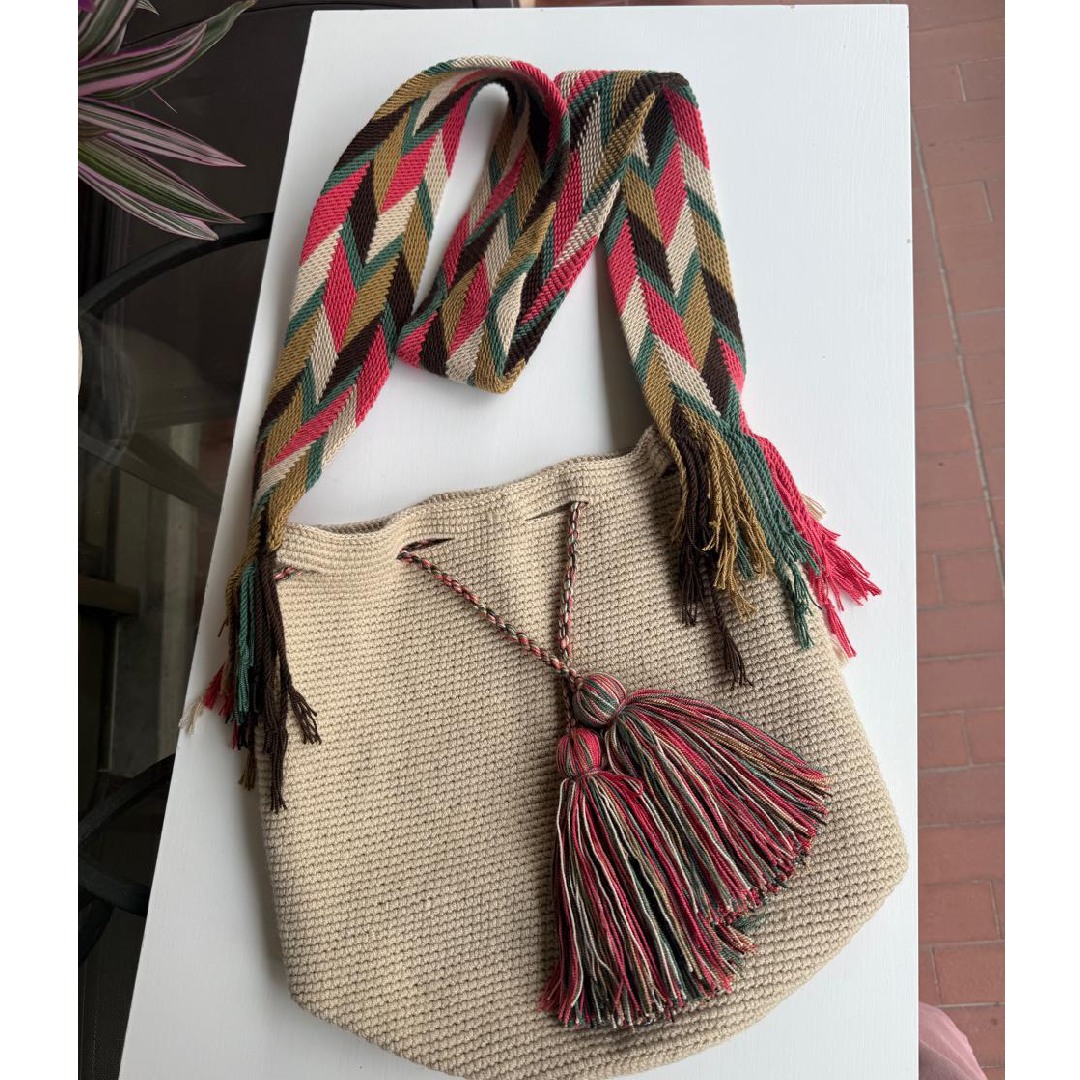
When people explore Wayuu culture, they quickly discover that it is deeply woven into the iconic mochila bags from La Guajira, Colombia. These handmade treasures are not only fashion accessories but also cultural expressions, carrying ancestral knowledge, stories, and traditions passed down for generations. Today, the bags stand as symbols of authenticity, fair trade, and timeless design—making them highly sought-after by those who value both heritage and style.
The origins of Wayuu culture
The Wayuu are an indigenous community that lives in La Guajira, the northernmost desert region of Colombia, near the Caribbean Sea. For centuries, their traditions have revolved around resilience, creativity, and respect for the land. Within Wayuu culture, weaving holds a central role. Women, and sometimes men, dedicate weeks to crocheting each mochila, embedding their identity and worldview into every stitch.
Symbolism in weaving patterns
One of the most fascinating aspects of Wayuu culture is the use of geometric patterns known as kanaas. These designs are far more than decoration—they are symbolic codes. Diamonds may represent the eye of a guardian spirit, zigzags can symbolize the journey of life, and stars often reflect the desert sky. Consequently, every Wayuu mochila becomes a piece of wearable storytelling.
Materials and durability
Traditionally, artisans used natural fibers. Today, most Wayuu bags are made with a blend of cotton and polyester, ensuring durability and vibrant colors. This choice is practical: the materials resist the desert sun, sand, and long journeys typical of Wayuu life. As a result, a mochila is not just a cultural item but also a long-lasting bag that adapts to modern needs.
Wayuu culture meets fashion
Global fashion has embraced Wayuu culture for its authenticity and unique designs. The vibrant colors and bold patterns of the mochilas pair beautifully with casual outfits, boho-chic styles, and even minimalist wardrobes. Whether carried as a shoulder bag or a crossbody, the mochila adds personality and distinction to any look.
Moreover, these bags are versatile enough for travel, daily errands, or special events. Their roomy design and sturdy strap make them practical while their artistry elevates them as statement pieces.
Supporting Wayuu communities
Buying a mochila is not just a style decision; it is a way to support Wayuu culture directly. At Colombian Native Craft, every purchase contributes to fair trade practices. Artisans receive fair compensation, which empowers families, sustains local economies, and ensures that traditional weaving techniques continue to thrive.
The perfect gift with cultural meaning
A Wayuu mochila is an extraordinary gift. Each one is unique, handmade, and carries a deep cultural value. At Colombian Native Craft, mochilas are gift ready, arriving in decorative packaging with tissue paper, ribbon, and sometimes a special note. This makes them ideal for birthdays, anniversaries, and cultural celebrations.
Why Wayuu culture matters today
In a world dominated by mass production, supporting Wayuu culture means choosing authenticity, sustainability, and heritage. Every mochila embodies a connection between the past and the present, proving that traditional craftsmanship remains relevant in modern fashion.
When you invest in a Wayuu bag, you invest in culture, sustainability, and artistry.
Discover our collection of Wayuu mochilas today and bring home a true piece of Colombian heritage. For wholesale or personal guidance, feel free to contact us via WhatsApp.
Frequently asked questions
What is the role of weaving in Wayuu culture?
Weaving is central to Wayuu identity, with each bag carrying cultural symbols and ancestral knowledge.
What materials are used in Wayuu bags?
Artisans primarily use cotton and polyester threads, ensuring durability and vibrant colors.
Are all Wayuu mochilas the same?
No. Each one is handmade with different patterns and color combinations, making it unique.
Can a Wayuu bag be a gift?
Yes. At Colombian Native Craft, every mochila is gift-ready, carefully packed for a special occasion.
How does buying a mochila support Wayuu culture?
Purchasing a bag helps sustain artisan communities through fair trade and keeps cultural traditions alive.
Leave a Reply